By Julia Schwarz
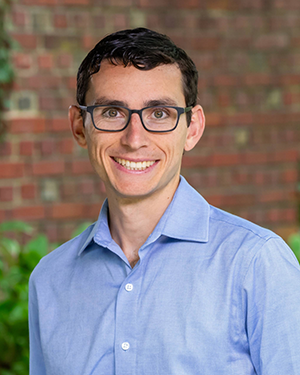
The Sloan Foundation has announced that Benjamin Eysenbach, an expert in reinforcement learning, has been selected as a 2026 Sloan Research Fellow in computer science.
The fellowship recognizes creative early-career researchers in the sciences and social sciences. Seven faculty members from Princeton have been awarded fellowships this year, and 259 Princeton faculty have received Sloan fellowships since they were first awarded in 1955.
An assistant professor of computer science, Eysenbach researches how AI systems learn and explore. Much of his work uses reinforcement learning techniques, a type of machine learning that uses rewards and feedback to teach an autonomous agent to make intelligent decisions through trial and error. His lab is now pushing the boundaries of reinforcement learning by exploring ways AI systems can learn without rewards. The goal is to design more robust, simpler methods to address important problems in science and society.
Sloan fellows receive a two-year, $75,000 fellowship which can be used flexibly. Fellowship candidates are nominated by their fellow scientists and winners are selected by an independent panel based on research accomplishments, creativity, and potential to become a leader in their field. Former fellows have gone on to receive the highest accolades, including Nobel Prizes and Fields Medals.
Eysenbach joined the Princeton faculty in 2023. He is affiliated with the Princeton Program in Cognitive Science, the Princeton Language Initiative and the Natural and Artificial Minds initiative.
His work has been recognized by a NeurIPS Best Paper Award, an NSF CAREER Award, and a Hertz Fellowship. He has also received an Alfred Rheinstein Faculty Award and recognition for outstanding teaching from the School of Engineering and Applied Science. He completed a doctorate in machine learning at Carnegie Mellon University and spent several years at Google Brain and Google Research before and during his doctoral work. He has an undergraduate degree in mathematics from MIT.