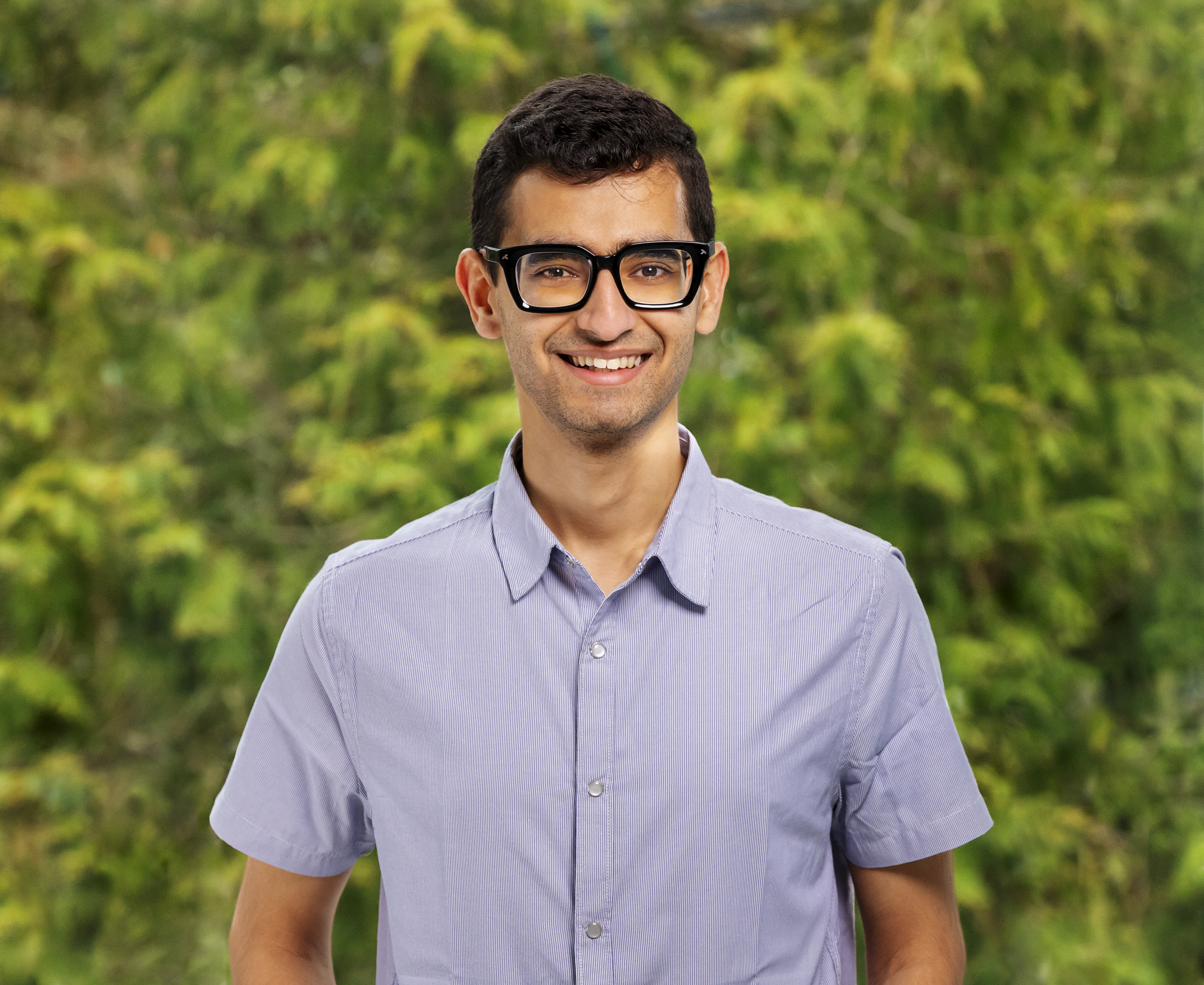

I am an incoming assistant professor at the UC Berkeley
School of Information, starting in July 2027. In July 2026, I completed my Ph.D. in computer science from Princeton University. I worked at the Center for Information Technology Policy, where I was a Porter Ogden
Jacobus Fellow. Previously, I was a senior fellow at Mozilla
and a Laurance
S. Rockefeller Graduate Prize Fellow at Princeton University.
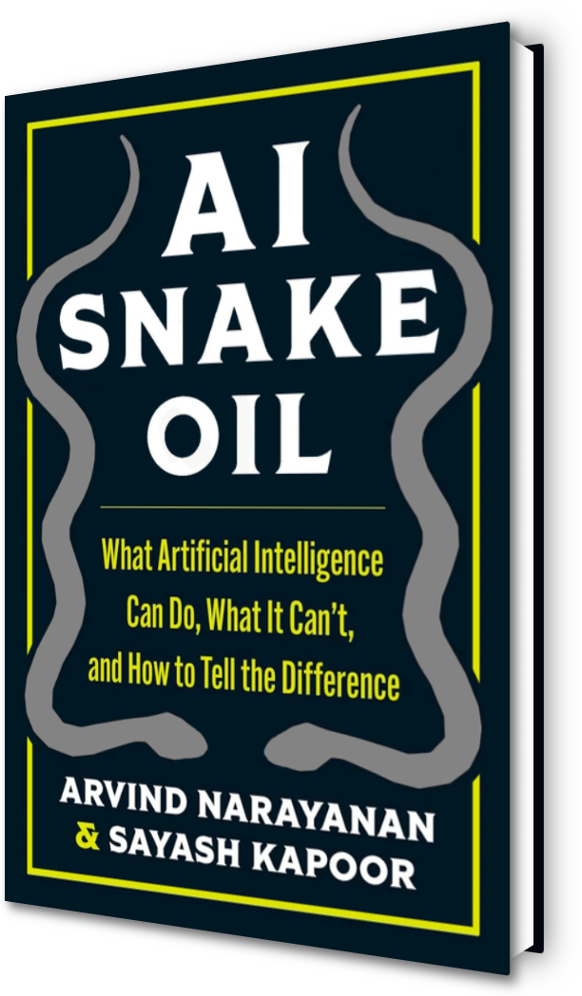
I co-authored AI Snake Oil with Arvind Narayanan, named one of Nature's 10 best books of 2024.
I was named one of MIT Technology Review’s 2026 Innovators Under 35 and have been included in the inaugural TIME100 AI
list and have received the Privacy Papers
for Policymakers Award, the 2026 IP3 Information Policy Award,
and the Jacobus
Fellowship, Princeton University's highest honor for a graduate student.
Prospective Ph.D. applicants: If you are interested in working with me at Berkeley, please fill out this form.
The science of AI evaluation
I study how to evaluate AI agents and frontier systems by building large-scale systems to conduct evaluations at scale.
- Reliability: Towards a Science of AI Agent Reliability (ICML 2026)
- Large-scale agent evaluation: HAL: Holistic Agent Leaderboard (ICLR 2026) · Project page
- Long-horizon, open-ended evaluation: CRUX: Open-world evaluations for frontier AI capabilities · Can AI agents conduct open-ended AI research? (preprint, 2026)
AI as Normal Technology
With Arvind Narayanan, I write the AI as Normal Technology newsletter, and we are working on our next book on the topic before I join Berkeley.
- Framework: AI as Normal Technology · Guide to AI as normal technology · AGI is not a milestone
- AI and institutions: Software engineering · Legal services · Scientific research
- Recommendations for policymakers: Government responses to AI's transformative impacts · Loss-of-control incidents
Evidence-based AI policy
I work on AI policy grounded in evidence about model openness, evaluation access, transparency, and accountability.
-
Open foundation models:
Science (2024): governance considerations for open foundation models.
ICML oral (2024): societal impacts of open foundation models. - FMTI: A longitudinal effort to measure transparency across leading foundation model developers: 2025 (TMLR 2026) · 2024 (TMLR 2025) · 2023 (TMLR 2025)
-
Accountability and input:
FLARE-AI (ICML 2026): interoperable AI flaw reporting.
ASAP RFI on AI-based science.
New Jersey Assembly: reducing harm from deepfakes.
Congressional Forum: accountability in predictive AI.
AI-based science
I study how AI-based science fails to reproduce and what practices, benchmarks, and reporting standards can make computational research more credible.
- Reproducibility: Leakage and the reproducibility crisis in ML-based science (Patterns 2023) · REFORMS: Consensus-based Recommendations for Machine-learning-based Science (Science Advances 2024).
- Benchmarking agents for reproducibility: A benchmark for evaluating AI's ability to reproduce computational research (CORE-Bench, TMLR 2024).
- Essays: Could AI slow science? (AI as Normal Technology 2025) · Scientists should use AI as a tool, not an oracle (AI as Normal Technology 2024).