SPE 2009 Projects

The students created websites documenting their summer projects.
Check out links below for the background, methodology, results, and downloadable programs.
Students: Gabe Cadamuro and Kathy Huang
Mentor: Aaron Wong
ANThropomorphism uses genetic programming principles to create an artificial life simulator based on the general behavior of ants. The ants dig through a cross section of varied terrain, attempting to find food before their health is gone. The downloadable program allows the user to specify the terrain makeup, fitness function, reproduction type, and more. Additionally, there are statistical displays, so that the user can gain a comprehensive view of the ants’ evolution.
2. Numerical Handwriting Recognition
Students: Caitlin Caldwell and Jane E
Mentor: Tao Yue (GS)
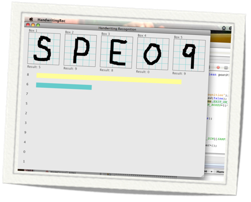
This program recognizes numerical digits written by the user, and gives the output in real-time. The underlying structure is a neural network, trained on gold standard handwritten data.
3. Graphle: A Visualization Tool for Functional Genomics
Student: Christina Chang
Mentor: Ana Pop (GS)
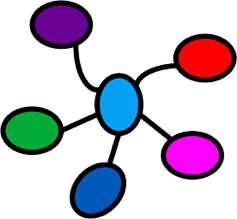
Graphle is a visualizer for gene function prediction networks: its goal is to simplify the presentation and sharing of large biological networks by making them easy to explore, quickly and intuitively, by biological collaborators using the web. This project extended Graphle by implementing the capability to analyze and visualize directed graphs, allowing biologists to query and explore predicted gene-gene regulation.
Students: Ori Daniel and Minqi Jiang
Mentors: Wyatt Lloyd (GS), David Shue (GS), Patrick Wendell ('11)
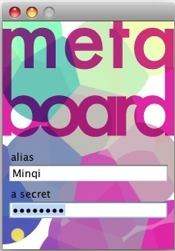
MetaBoard is the virtual love-child of those spontaneous, off-the-cuff (and at times off-color) dormitory whiteboards and the vast social-networking forces of the internet. With a MetaBoard, you and your friends can draw on one another’s desktops with the stroke of a mouse. Once registered, each user owns a personal MetaBoard, on which online users may scribble the quotidian or quixotic--quotes, quips, quarrels, all with digital quills.
5. Seam Carving
Students: Inés Sheppard and Alejandro Zúniga
Mentor: Nadia Heninger (GS)
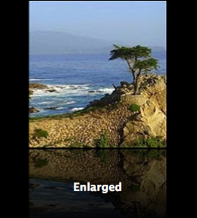
The seam carving algorithm (Shai Avidan and Ariel Shamir) alters the dimensions of an image not by scaling or cropping, but rather by intelligently removing pixels from (or adding pixels to) the image that carry little importance. This project implements an energy function to determine which pixels are least important, and dynamic programming is used to find the "seam." The program includes extra features and an interactive interface.