COS 126 Recursive Graphics Submissions, Spring 2012


NAME AND DESCRIPTION N = 1 N = 2 N = 3 N = 4 N = 5 N = 6
Christopher Kwadwo Ampofo Gordon

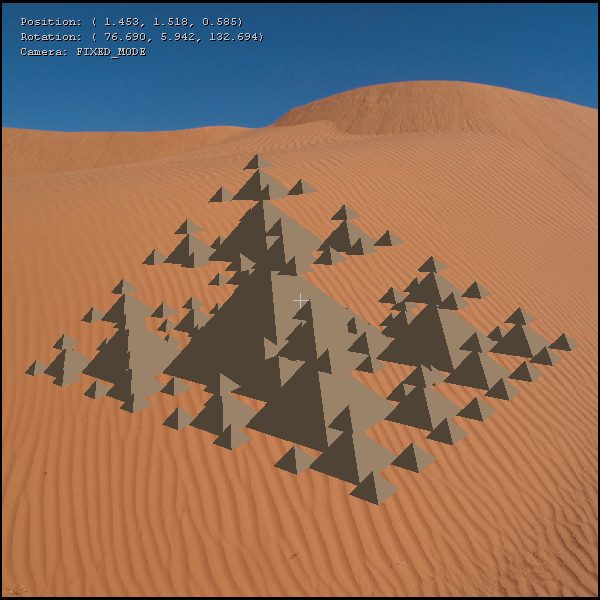
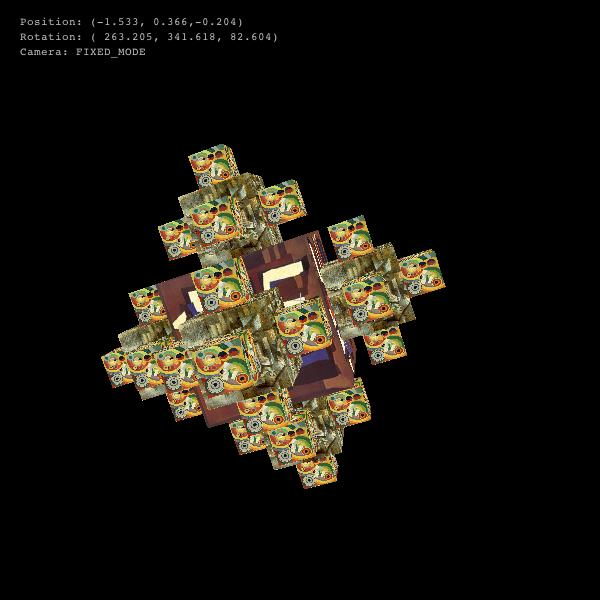
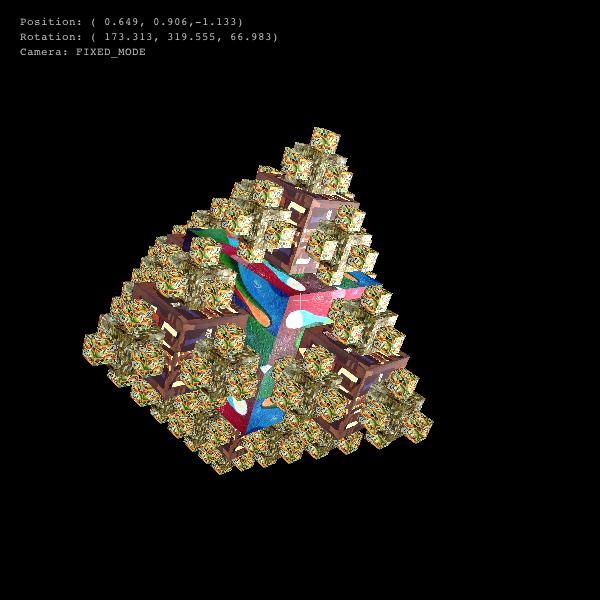
I drew inspiration for this design from the pyramids of Egypt. I decided to tweak the system a bit by placing some pyramids on top at each recursive level. Lastly to add some atmosphere, I added the background picture.
I drew inspiration for this design from the  pyramids of Egypt. I decided to tweak the system a bit by placing some pyramids on top at each recursive level. Lastly to add some atmosphere, I added the background picture. I drew inspiration for this design from the  pyramids of Egypt. I decided to tweak the system a bit by placing some pyramids on top at each recursive level. Lastly to add some atmosphere, I added the background picture. I drew inspiration for this design from the  pyramids of Egypt. I decided to tweak the system a bit by placing some pyramids on top at each recursive level. Lastly to add some atmosphere, I added the background picture. I drew inspiration for this design from the  pyramids of Egypt. I decided to tweak the system a bit by placing some pyramids on top at each recursive level. Lastly to add some atmosphere, I added the background picture. I drew inspiration for this design from the  pyramids of Egypt. I decided to tweak the system a bit by placing some pyramids on top at each recursive level. Lastly to add some atmosphere, I added the background picture. I drew inspiration for this design from the  pyramids of Egypt. I decided to tweak the system a bit by placing some pyramids on top at each recursive level. Lastly to add some atmosphere, I added the background picture.
Jacob Lee

My artistic creation is inspired by the movie 300, specifically the scene in which the Persian archers fire so many arrows at the Spartans that they "blot out the sun." It depicts countless, densely packed arrows falling. I wrote it by creating a function that used cylinders for the arrow shafts, rotating them 90 degrees so that it faced the camera (interestingly, axial rotations in StdDraw3D are in degrees, not radians), and by using cones for the arrowheads. Because the cones are centered on a point half their height above or below their base, I centered the cones on a point half the height of the cone above the cylinder's end. I then made the function recursively call itself four times with slightly different parameters each time, creating even more arrows.
My artistic creation is inspired by the movie 300, specifically the scene in which the Persian archers fire so many arrows at the Spartans that they My artistic creation is inspired by the movie 300, specifically the scene in which the Persian archers fire so many arrows at the Spartans that they My artistic creation is inspired by the movie 300, specifically the scene in which the Persian archers fire so many arrows at the Spartans that they My artistic creation is inspired by the movie 300, specifically the scene in which the Persian archers fire so many arrows at the Spartans that they My artistic creation is inspired by the movie 300, specifically the scene in which the Persian archers fire so many arrows at the Spartans that they My artistic creation is inspired by the movie 300, specifically the scene in which the Persian archers fire so many arrows at the Spartans that they
Michael Manhard

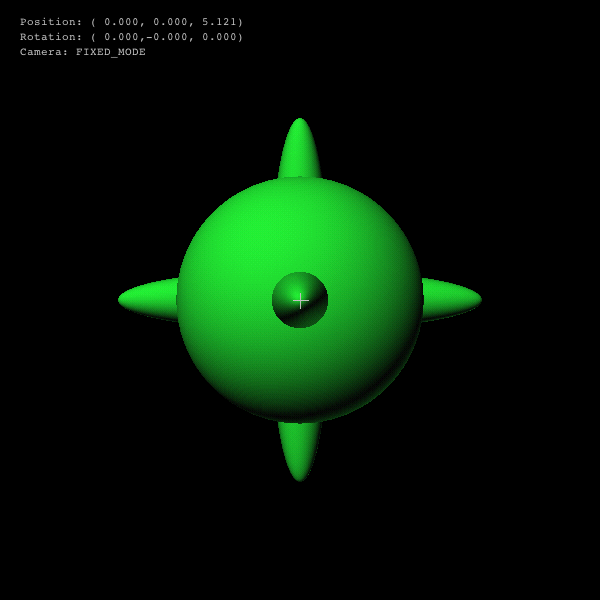
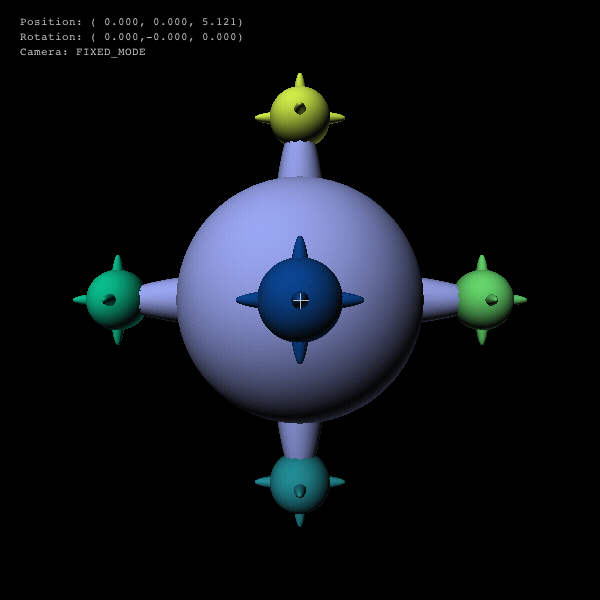
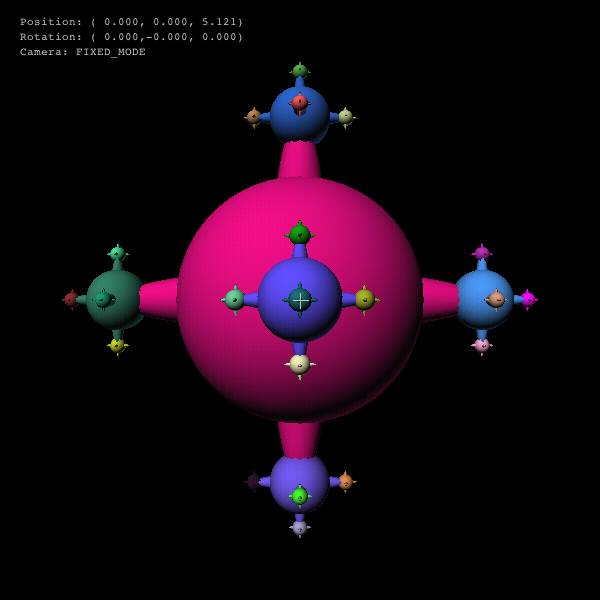
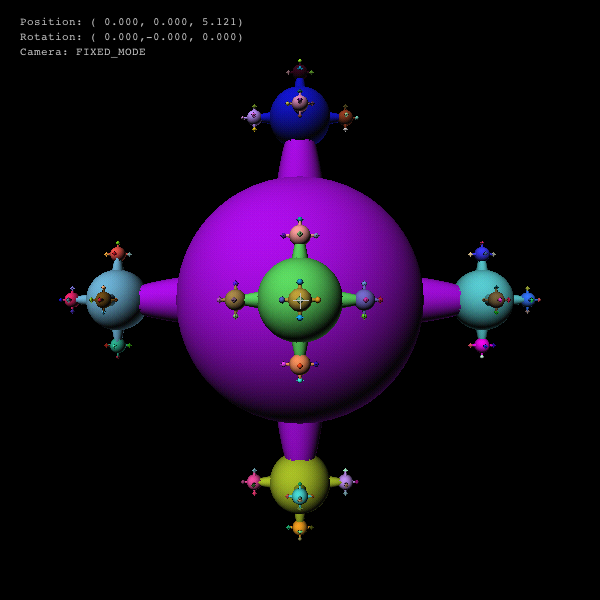
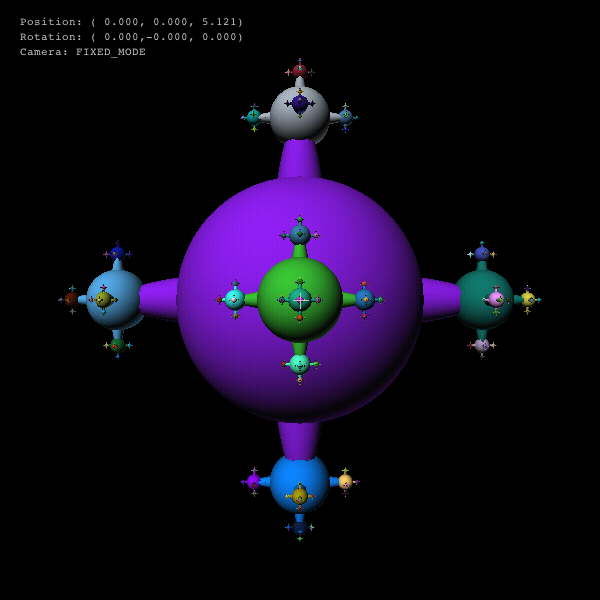
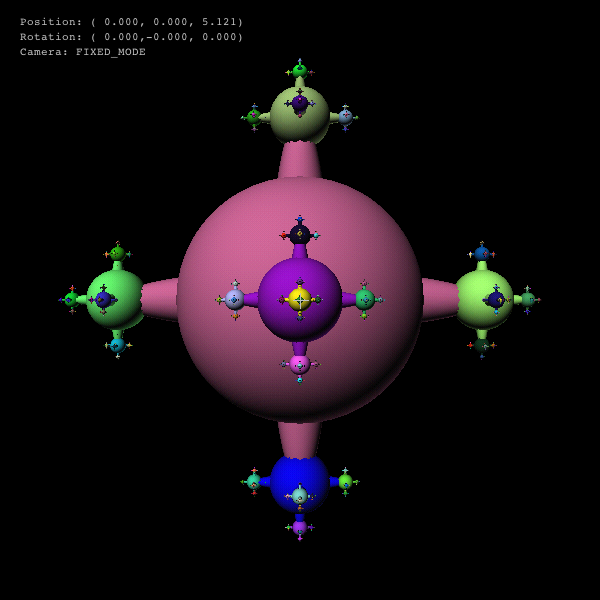
My artistic creation consists of an assortment of randomly colored spheres connected by pegs. Each sphere has 6 pegs on it that are created by 3 ellipsoids that go along the x,y, and z axes. At the end of each peg, there is another sphere with 6 pegs (unless N=1 at that point). This system of spheres represents an odd ....
My artistic creation consists of an assortment of randomly colored spheres connected by pegs. Each sphere has 6 pegs on it that are created by 3 ellipsoids that go along the x,y, and z axes. At the end of each peg, there is another sphere with 6 pegs (unless N=1 at that point). This system of spheres represents an odd .... My artistic creation consists of an assortment of randomly colored spheres connected by pegs. Each sphere has 6 pegs on it that are created by 3 ellipsoids that go along the x,y, and z axes. At the end of each peg, there is another sphere with 6 pegs (unless N=1 at that point). This system of spheres represents an odd .... My artistic creation consists of an assortment of randomly colored spheres connected by pegs. Each sphere has 6 pegs on it that are created by 3 ellipsoids that go along the x,y, and z axes. At the end of each peg, there is another sphere with 6 pegs (unless N=1 at that point). This system of spheres represents an odd .... My artistic creation consists of an assortment of randomly colored spheres connected by pegs. Each sphere has 6 pegs on it that are created by 3 ellipsoids that go along the x,y, and z axes. At the end of each peg, there is another sphere with 6 pegs (unless N=1 at that point). This system of spheres represents an odd .... My artistic creation consists of an assortment of randomly colored spheres connected by pegs. Each sphere has 6 pegs on it that are created by 3 ellipsoids that go along the x,y, and z axes. At the end of each peg, there is another sphere with 6 pegs (unless N=1 at that point). This system of spheres represents an odd .... My artistic creation consists of an assortment of randomly colored spheres connected by pegs. Each sphere has 6 pegs on it that are created by 3 ellipsoids that go along the x,y, and z axes. At the end of each peg, there is another sphere with 6 pegs (unless N=1 at that point). This system of spheres represents an odd ....
Dror Liebenthal

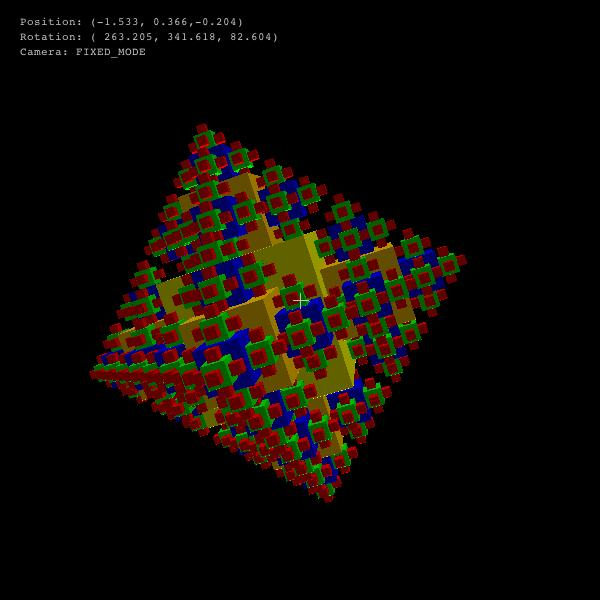
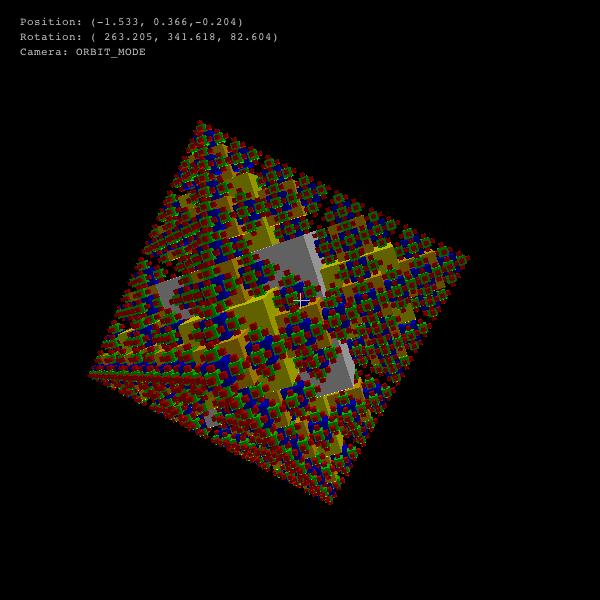
My artistic portion uses StdDraw3d to a cube with smaller cubes on each face, and then yet smaller cubes on each face of the smaller cube etc. according to the input depth N. I used the booksite as a reference for a quick tutorial on how to use StdDraw3d.
My artistic portion uses StdDraw3d to a cube with smaller cubes on each face, and then yet smaller cubes on each face of the smaller cube etc. according to the input depth N. I used the booksite as a reference for a quick tutorial on how to use StdDraw3d. My artistic portion uses StdDraw3d to a cube with smaller cubes on each face, and then yet smaller cubes on each face of the smaller cube etc. according to the input depth N. I used the booksite as a reference for a quick tutorial on how to use StdDraw3d. My artistic portion uses StdDraw3d to a cube with smaller cubes on each face, and then yet smaller cubes on each face of the smaller cube etc. according to the input depth N. I used the booksite as a reference for a quick tutorial on how to use StdDraw3d. My artistic portion uses StdDraw3d to a cube with smaller cubes on each face, and then yet smaller cubes on each face of the smaller cube etc. according to the input depth N. I used the booksite as a reference for a quick tutorial on how to use StdDraw3d. My artistic portion uses StdDraw3d to a cube with smaller cubes on each face, and then yet smaller cubes on each face of the smaller cube etc. according to the input depth N. I used the booksite as a reference for a quick tutorial on how to use StdDraw3d. My artistic portion uses StdDraw3d to a cube with smaller cubes on each face, and then yet smaller cubes on each face of the smaller cube etc. according to the input depth N. I used the booksite as a reference for a quick tutorial on how to use StdDraw3d.